
Polish companies have never invested as much in Croatia as in recent years. September 2026 showed the other side of that story: Studenac, the country’s largest store network and Poland’s flagship investment, entered pre-bankruptcy proceedings. Set side by side, the failures and successes of Polish capital in Croatia offer concrete lessons for anyone considering this market.
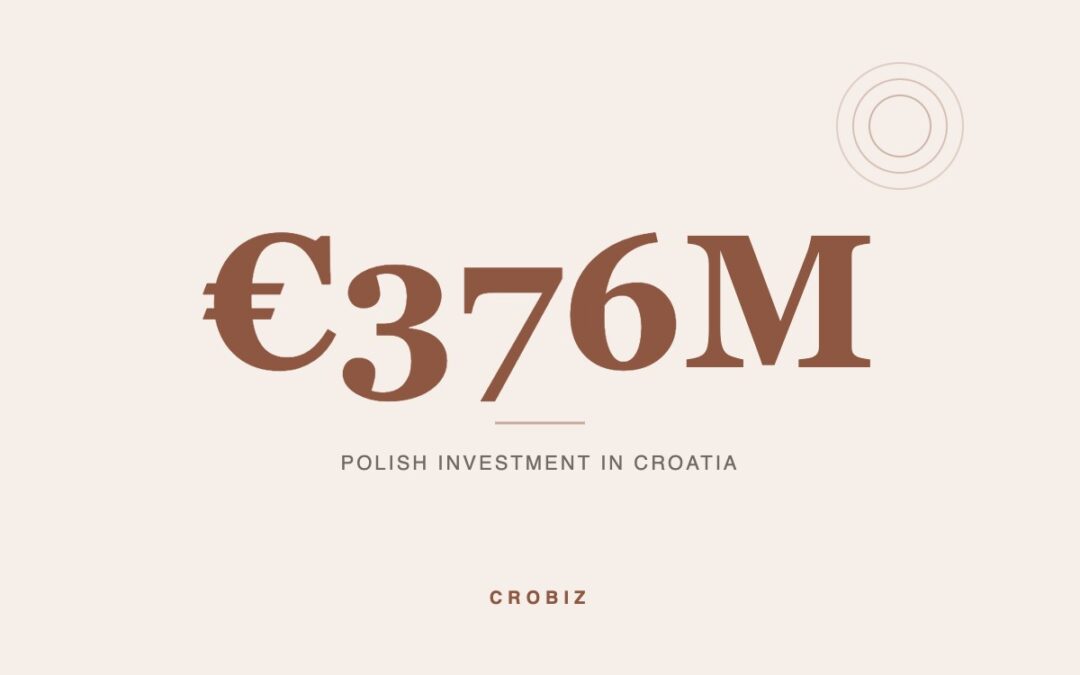
According to Bloomberg Adria, Polish investors put €376 million into Croatia over the past five years, compared with less than €140 million in the three decades before.
Studenac: from a cancelled IPO to pre-bankruptcy in under two years
Warsaw-based private equity firm Enterprise Investors bought Studenac in 2018, when it was a family-owned chain of around 360 stores, mainly in Dalmatia. The fund invested more than €300 million and, through a series of acquisitions, turned it into the Croatian chain with the largest number of stores.
The first warning sign came in November 2024, when a Zagreb Stock Exchange listing valuing the company at around €523 million was called off for lack of investor demand.
In September 2026, Studenac filed for pre-bankruptcy proceedings. The court in Split opened them, the company’s accounts were blocked and suppliers stopped being paid. The chain is closing 170 stores, and Teo Vujčić has taken over with a restructuring mandate.
- total debt of around €450 million;
- 2025 sales of around €850 million, still growing;
- a 2025 net loss of around €30 million;
- 170 stores closing out of more than 1,400.
The case is instructive because Studenac did not fail for lack of customers. Sales grew to the very end. The problem was the growth model: expensive acquisitions financed by bank debt and extended payment terms with suppliers. Auditors had already flagged breaches of loan covenants for 2025.
Sources: Bloomberg Adria, Plava kamenica, 24ur
The success stories: same fund, very different outcome
Pan-Pek and Inter Europol. The same firm that bought Studenac acquired Zagreb bakery Pan-Pek in 2018. It expanded production, launched exports to Italy and the US, and in July 2025 sold 100% of the company to Polish bakery group Inter Europol. Pan-Pek today has around 800 employees, two plants, more than 70 own outlets and over €50 million in revenue.
Renters and Irundo. Poland’s largest short-term rental operator acquired Irundo, which manages more than 300 apartments in Zagreb, Dubrovnik, Rovinj, Rijeka and Opatija. The brand and team were retained.
Benefit Systems (Multisport). After building a base of more than 20,000 users and over a thousand corporate clients, the company began acquiring local fitness clubs, including Zagreb’s Allegra and the Orlando Fit chain.
WB Group. In September 2026, Croatia signed a €435.2 million contract for South Korean Chunmoo rocket launchers, with Polish TOPAZ systems handling command, fire control and communications.
PragmaGO. The Polish fintech opened a Croatian subsidiary in spring 2026, offering SMEs non-bank financing repaid through card terminals.
Sources: Inwestycje.pl, e-Hotelarz, Lider, Kresy.pl, Lider
Those who withdrew: Allegro
In early 2026, Allegro announced its withdrawal from Croatia and Slovenia, two markets inherited through its acquisition of the Czech Mall Group. The company explained that they ran on legacy infrastructure that was simply too costly at that sales scale. German fund Mutares is taking over the operations. It is a reminder that Croatia, with fewer than four million inhabitants, needs a model sized to the market rather than a copy of a large-market playbook.
Source: XYZ.pl
Three lessons for investors
1. Growing sales do not protect against a liquidity crisis. Growth financed by debt and supplier credit is fragile, and Croatian suppliers and banks react quickly when payments slip.
2. Acquiring a local brand with its team works best. Pan-Pek and Irundo kept their names and people, while the new owner added capital and access to greater scale.
3. Not every investment has to be financed with debt. EU grants for production expansion, new technologies and energy efficiency are still available in Croatia and do not burden the balance sheet.
Planning to enter the Croatian market or acquire a local company? CroBiz helps assess partners, check risks and find EU funding for the investment.
This analysis was first published in the CroBiz newsletter for Polish investors. Want market signals like these in your inbox? Subscribe on our homepage or book a call to discuss your project.