
Croatia sits on an unusual combination: some of the highest entrepreneurial ambition in the EU, and a financing environment that still makes growth expensive. Two developments from spring 2026, a fresh OECD report and the largest investment announcement in the country’s history, show why that gap is exactly where outside investors can add value.
The OECD verdict: credit is costly, but the market is maturing
The OECD’s Financing SMEs and Entrepreneurs 2026 scoreboard, published in March and covering 48 countries including Croatia, paints a mixed but readable picture for investors.
- New SME lending is recovering after years of stagnation, yet the overall stock of small-business loans remains flat. New companies are getting financed, but the market as a whole is not expanding as fast as it could.
- Borrowing costs for SMEs remain clearly above pre-pandemic levels. Banks have kept conditions tight despite monetary easing. For anyone considering the acquisition of a local company, leverage will be more expensive than it first appears.
- Market-based alternatives are growing unevenly. Factoring and leasing are expanding, and equity financing is picking up, but mostly in large AI-related deals. For a typical mid-sized Croatian company, capital exists, but it is not easy to access.
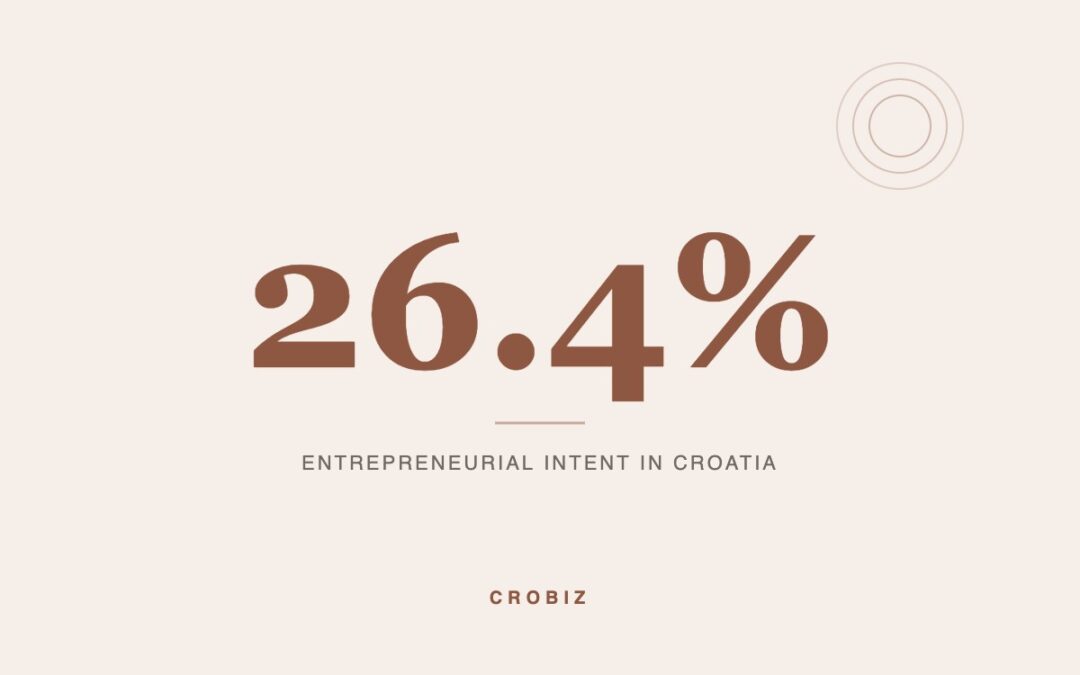
The GEM Croatia report adds an important layer. For the third year running, Croatia ranks first in the EU for entrepreneurial intentions: 26.4% of adults plan to start a business, against an EU average of 15.3%. Yet the share of companies that survive beyond 42 months is among the lowest in the Union. The energy and ambition are there; structure, capital and operational support are missing. That is precisely the role external investors can play.
Source: OECD, Financing SMEs and Entrepreneurs 2026
Project Pantheon: a €50 billion AI data centre plan in Topusko
At the Three Seas Initiative business forum in Dubrovnik, the Končar Group signed a letter of intent with the investors behind Project Pantheon, an AI development and data centre campus planned for Topusko. The announced value exceeds €50 billion, which would make it the largest investment in Croatian history. The project is led by Croatian entrepreneur Jako Andabak in partnership with US institutional investors.
As announced, the plan includes:
- a dedicated substation and around 280 km of new high-voltage lines, to be delivered by Končar;
- a 500 MW solar power plant serving only the campus, with Greenvolt as partner;
- 5.2 GW of additional grid capacity for new renewable projects across Croatia;
- around €500 million for public infrastructure, including power, roads and fibre.
The developers speak of more than 3,000 construction jobs, around 1,500 permanent jobs at launch, and an operational start targeted for 2029.
What it could mean for foreign investors
- Demand for renewables and energy infrastructure in the Banovina and Slavonia regions, including smaller solar, storage and distribution projects.
- Thousands of new workers in the surrounding ecosystem, creating demand for housing, services, local logistics and suppliers.
- A shift in Croatia’s profile from a tourism economy towards a Central European technology hub, if the project proceeds as planned.
A note of caution is essential: a letter of intent is not a binding contract, and Končar itself confirmed the document is non-binding. Construction was planned to start no earlier than 2027. Investors should keep their expectations proportionate to the stage of the project, but if it does go ahead, it will redefine the regional investment market.
Source: Index.hr
What CroBiz sees in this paradox
On one side, small Croatian firms are struggling for affordable capital. On the other, the country is negotiating the largest investment in its history. A market with strong fundamental energy but weak structure is the most interesting kind for outside investors, because it leaves room to build something of your own: acquiring and professionalising local companies, co-investing alongside EU grants, or supplying the ecosystems that large projects create.
Our case studies show how this has worked in practice, from a €12 million hotel reconstruction in Dubrovnik to greenfield manufacturing in Slavonia and IT market entry.
This analysis was first published in the CroBiz newsletter for Polish investors. Want market signals like these in your inbox? Subscribe on our homepage or book a call to discuss your project.