
Two Croatian sectors are attracting serious capital in 2026: premium tourism and renewable energy. Both combine real market demand with access to EU funding. And a recent CroBiz project shows how the second can work in practice for a foreign company.
A fresh CroBiz case: €1 million for a Slovenian pellet producer
A Slovenian wood pellet producer has successfully secured €1 million in EU funding to expand its operations in Croatia, in cooperation with CroBiz. The project matters beyond its own value for three reasons:
- EU funds in Croatia still work, if you know where, when and how to apply.
- The Croatian market is open to companies from Slovenia and the wider CEE region, not only to large players from Germany, Austria or Poland.
- A trusted local partner makes the difference between an interesting idea and a contracted million.
The sector itself, bioenergy and renewable heat, is one of the most dynamic segments of Croatia’s energy industry. Our work covered everything from analysing funding options to preparing documentation and securing the grant.
Premium tourism: Croatia stops competing on price
Recent reports from Deloitte, the European Travel Commission and Monitor.hr confirm a trend visible in the sector for years: Croatia is moving away from mass tourism and competing on quality instead.
- An investment cycle of around €600 million in premium tourism through 2027;
- around 5,000 new luxury rooms by 2027;
- an average investment of roughly €235,000 per unit.
Flagship projects include Valamar’s Pical Resort in Poreč, Adris’s renovation of the Hotel Marjan in Split, and the coastal expansion of Marriott and Hilton. Inland, wellness projects in Bjelovar and Topusko are emerging.
The season is also lengthening. June 2025 saw record growth in overnight stays (+14.5% year on year) and September grew 6.3%, while July and August stagnated. Growth is now happening outside the peak months. The ETC forecasts 6% more tourist arrivals to Europe in 2026, with spending rising faster than arrivals.
The takeaway: classic holiday-apartment investments are losing competitiveness, especially with higher flat-rate taxes on short-term rentals. Premium hospitality, wellness, food and wine, culture and year-round projects are where the money is going.
Sources: Forbes Hrvatska / Deloitte, Monitor.hr, INOVA
Renewable energy: 1.9 GW by 2030, 9 GW of potential
Croatia has set a national target of 36.4% renewables in final energy consumption by 2030, and the sector is growing faster than most observers notice.
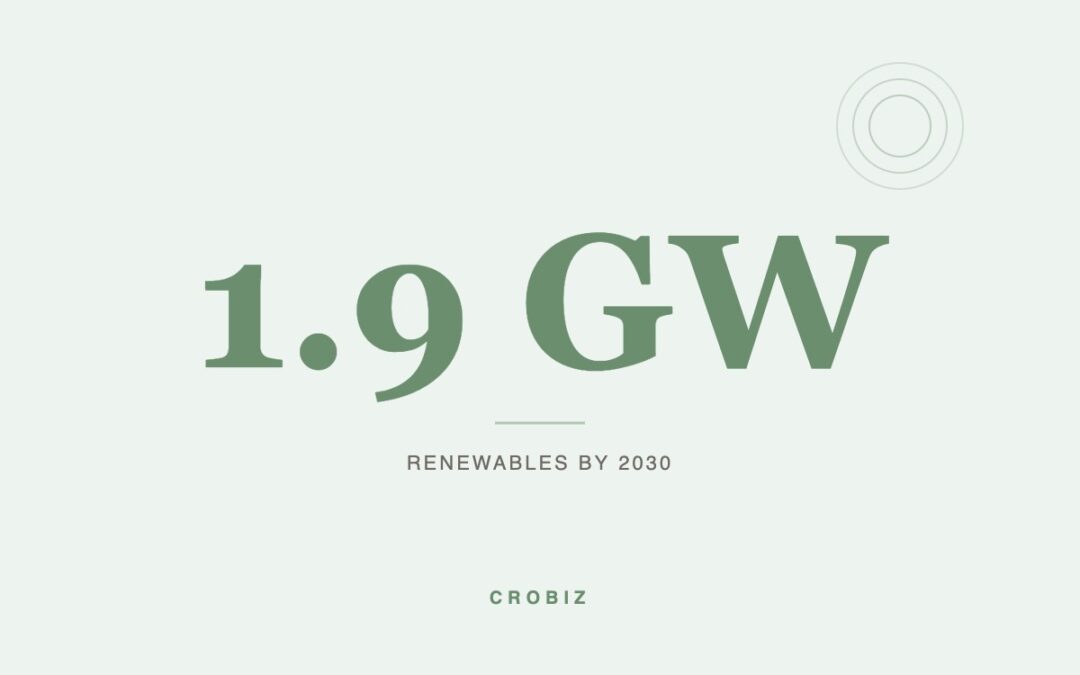
- Installed renewable capacity could reach 1.9 GW by 2030, excluding small hydro, according to GlobalData figures cited by the Croatian renewables association.
- Combined wind and solar potential is estimated at up to 9 GW. Wind is concentrated along the southern and south-western coast, solar across Dalmatia.
- Over the past 15 years, renewable investment in Croatia has been carried almost entirely by private companies rather than the state utility.
- Geothermal energy in northern Croatia remains a large, untapped resource for both power and heat.
- The energy regulator HERA has set grid connection fees, giving new projects a clearer regulatory framework.
For investors, renewables combine two advantages: EU funding support and genuine market need. Meeting the 36.4% target requires real capacity to be installed, which creates real demand.
Sources: OIEH, Dani OIE 2026
This analysis was first published in the CroBiz newsletter for Polish investors. Want market signals like these in your inbox? Subscribe on our homepage or book a call to discuss your project.